
Two years ago, Noel-Andrew and Roxanne Bennett published a children's book about a girl named Lizzy, her grandmother's jerk chicken, and the family history hidden inside a delicious recipe. That book is now headed to the screen — backed by a grant from the Jamaica Screen Development Initiative (JSDI) and the agency JAMPRO, with an animated short currently in production, targeting completion by late 2026 ahead of a festival run.
The Toronto-based husband-and-wife duo, who immigrated from Jamaica over a decade ago, caught up with EatOkra to talk about why they chose food as the entry point into an immigrant story, what’s exciting them about Toronto cuisine, and why adapting their picture book for the screen is an important win for Caribbean representation.
On why jerk chicken became the way in
"We always knew we wanted to work on a creative project influenced by our lives and rooted in what immigrant families, Caribbean and Jamaican families, go through. When you think about Jamaica, one of the major exports folks know on a global scale is our food and our music — particularly jerk. We used that as the conduit to tell the story.”

On the layers packed into the story
"You see the layers in there — the story, like the mom sharing with her daughter what she used to be back home, and what she had to evolve through when she moved overseas. The preparation of the food, the multi-generational family — grandma is living in the home, which is such a natural process for immigrant families. We even brought in the dad, who was military.
There were so many layers we thought about as we were writing the story, but also tying it back to the food — making sure that process and the history associated with it, and even touching on some deeper topics, the things ancestors had to go through. We realized there were a lot of elements people connected with."

On the reactions that have stayed with them
"One woman came up and got really emotional — she'd lost her mom and her aunt, and in that moment she was realizing she'd also lost all their recipes, all the tradition that came with them. We had people who were Italian connect with it the same way, in terms of maintaining tradition. It wasn't segmented to only Caribbean or Jamaican culture.”
On Toronto's Caribbean food scene
"We have to give a huge shout out to Chubby’s. When we launched the book, they were an integral part of it, that's where we held our launch. They're one of the top spots in Toronto, on Portland Street, and they do a really good jerk chicken, food infused with different things. I don't know if it's still on the menu, but they had an ackee and saltfish mac and cheese. There are so many spots in Toronto, smaller shops, one person serving — that's where some of the best food lives. It's never the fancy restaurant. It’s that corner place, a hole in the wall technically, but they serve some of the best rice and peas, curry goat. The best parts, if you want authentic Jamaican food, are arguably in Scarborough."
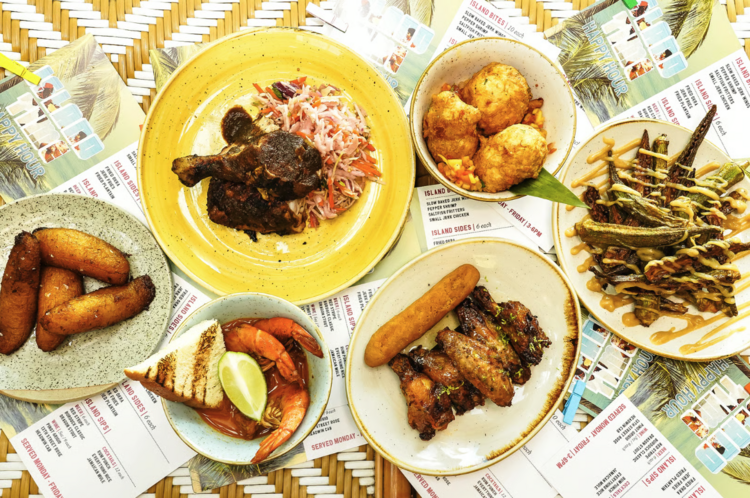
Chubby's Jamaican Kitchen
104 Portland St
Toronto , M5V 2N2
Jamaican • Caribbean

On adapting the book for animation
"The process of transitioning from a book to script has been so interesting. We've worked on evolving the characters, not changing specific things, but figuring out what fits a screen and an audience that will really resonate with the story. It's been a collaboration with the studio we're working with now, who've been really good partners in terms of advising us as we roll through things. While they're not necessarily from Caribbean culture themselves, I think they were really fascinated with the story, and when we clicked with people on that front, it just worked.
Doing an animated short means you have to get to your hook pretty early. You have to keep the audience engaged, but at the same time you want to be culturally relevant and authentic, and keep moving the story along. The format for a book is definitely not the same as film — but you can still think about it in a three-act framework. There's a lot of back and forth with the studio, making sure we packed those six to eight minutes right. Some things are non-negotiable — like, do we need this? Yes, that's actually something the audience will really understand. So it's good that they're collaborative, while we push back on certain things to make sure it still works.
We've yet to see animation embrace the Caribbean and those stories. We check all the boxes — vibrant, colorful, amusing. So why is it missing? We're hoping we can be the ones to spark that.
You've got to "C" it to believe it. Our ongoing Culinary Creatives Chat series is a virtual space to empower Black food entrepreneurs through testimonies from thriving industry peers.